

Green home building which is also referred to as eco-friendly construction, involves the use of environmentally friendly materials and application methods that are resource efficient and responsible through the entire life-cycle of the building. As the science of health continues to detect effects from past building products and with the increasing cost of energy, green building has become much desirable to incorporate into new construction and renovation practices. We will discuss some of the substantial benefits of implementing green home building practices.
“Did You Know?Green buildings can reduce overall energy consumption by up to 30–50% compared to conventional construction methods, while also improving indoor air quality and long-term durability.”
Key Takeaways
- Green home building focuses on sustainability throughout the entire building lifecycle
- Eco-friendly materials improve durability and reduce long-term maintenance costs
- Energy and water efficiency play a critical role in lowering environmental impact
- Indoor air quality is significantly improved through green construction practices
- Preserving natural resources benefits both current and future generations
Sustainable Products
Green home building is all about the use of sustainable products being properly implemented for their intended use. Sustainable products can be raw materials or processed materials that typically do not denigrate over time. By definition these products provide environmental, social and economic advantages to the longevity of the building.
The most common thought of sustainable products are natural resources such as stone, wood and metals. Sustainable products can also be manufactured from recycled materials and created from natural material compositions. The common elements are the natural fibers of the environment that are used in each product that allows it to be biodegradable or recycled.
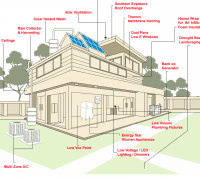
Lower Maintenance and Operating Cost
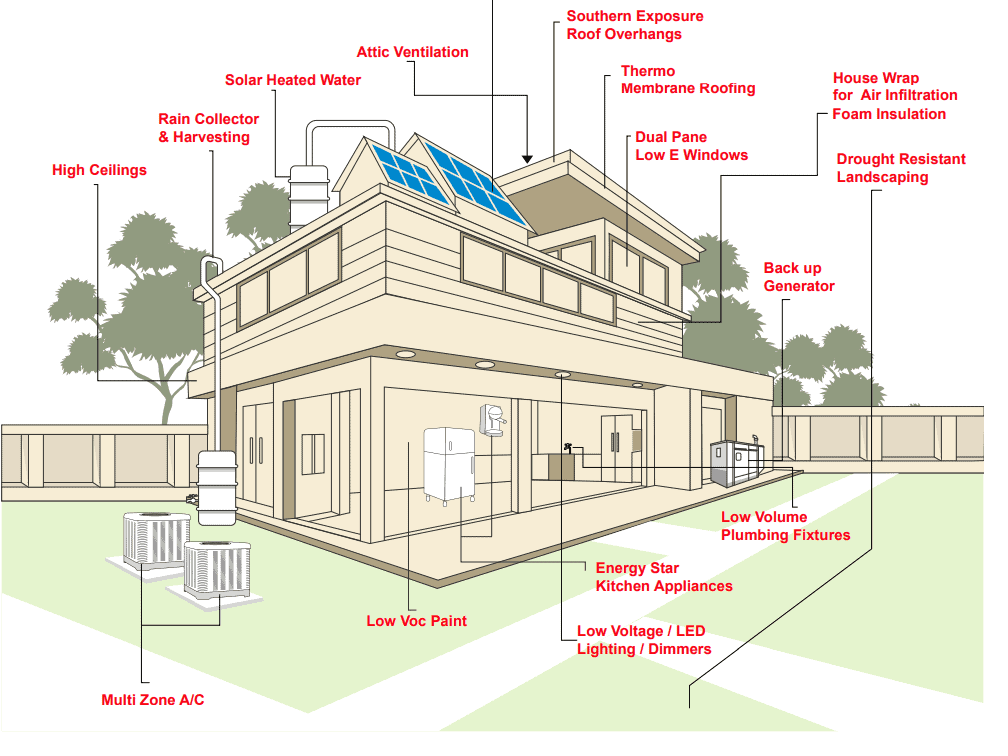
One of the principle goals in building green is to lower building maintenance cost through the use of sustainable products. It is widely publicized that green building reduces maintenance cost by as much as 20%. Green building also reduces the operating cost of the building while saving up to 10% in annual cost.
Improves Indoor Environment Quality
One of the hallmark achievements sought in eco-friendly construction is the improvement of air quality. This is due to the reduction of synthetic products that attract and gather indoor allergen elements like mold, fungi, bacteria and dust mites. High levels of water moisture in a home over a long period of time can result in the deterioration of structural components and create an environment conductive for termites and dry rot.
Material Efficiency
Material efficiency is the process of recycling reusable materials and processing sustainable products. It is commonly thought of as producing more of a certain product using less of the natural resources it is composed of. An example of this is the recycling of steel, which requires approximately 70% less energy to remanufacture a second time and saves valuable space in landfills. This process also uses less energy, reduces emissions and reduces consumption of scarce raw materials.
Energy Efficiency
The ultimate goal of green building is to increase energy efficiency on multiple levels. First of all energy efficiency reduces carbon emissions from homes and power plants. This also leads to extending and preserving natural resource consumption. By reducing emissions we are also increasing the quality of our environment and reducing potentially harmful gases that can create health issues in humans, while blocking sunlight in the photosynthesis process.
Energy efficiency is the key bi-product result of all green building factors. If your goal is reducing emissions or preserving natural resources or reducing cost, the green building construction strategy results in energy efficiency. This is why it is important to incorporate many of these interrelated green building advantages into your building design plans.
Water Conservation
Water conservation is often overlooked when considering the advantages of green building. As the world’s population continues to grow the access to clean water continues to be a challenge for coming generations. Typical water efficiency in homes can be associated with introducing new Energy Star appliances and installing new plumbing fixtures that reduce the consumption of portable water.
Water collection (harvesting) systems are also receiving greater attention as the cost of municipal water treatment continues to skyrocket. These methods of conservation include retention ponds for landscape and plant irrigation use. Even the metering of water continues to change, by reducing pipe size which increases pressure.
Reduces Impact on Scarce Natural Resources
Preserving scarce natural resources is one of the greatest benefits of being eco-friendly. This traditionally involves conservation strategies by implementing legal tactics that eliminate harmful practices that lead to the negative impact on the future supplies of natural resources. An example of this is allowing toxic gases and liquids to migrate directly to our water supplies. Another example is strip mining that results in the erosion of top soil, which prevents future trees and plants from regeneration.
A Responsible Approach to Building for the Future
The greatest advantages of green building is understanding how the design, products and practices are all interconnected. It requires a perspective of results and consequence to realize the greatest benefits. This all starts with an attitude of placing a high priority on preserving scarce natural resources and understanding the importance of our current behavior has on the future generations resources. In most cases, when a natural resource is gone, it is gone. At that point it is too late.
Frequently Asked Questions
What is green home building?
Green home building refers to eco-friendly construction practices that use sustainable materials and energy-efficient systems throughout a building’s lifecycle.
Are green homes more expensive to build?
While initial costs may be slightly higher, green homes typically save money over time through reduced energy, water, and maintenance expenses.
How does green construction improve indoor air quality?
By reducing synthetic materials and moisture buildup, green homes limit allergens such as mold, bacteria, and dust mites.
What role does energy efficiency play in green building?
Energy efficiency reduces carbon emissions, lowers utility costs, and conserves natural resources.
Why is water conservation important in green homes?
Water conservation helps preserve clean water supplies for future generations while reducing household water consumption and utility costs.