

Design build is unquestionably the most efficient construction delivery method that currently exists for designing and building a new build or remodeling homes.
What was once considered an alternative approach in new home construction is now being implemented as the preferred home building delivery method by owners, builders and architects.
The design build construction method of project delivery has become a common practice and is one of the most efficient home-building delivery methods that any new home builder can implement.
For Houston homeowners and business owners weighing design-build vs design bid build, the choice usually comes down to speed, cost certainty, and who is accountable when something changes mid-project.
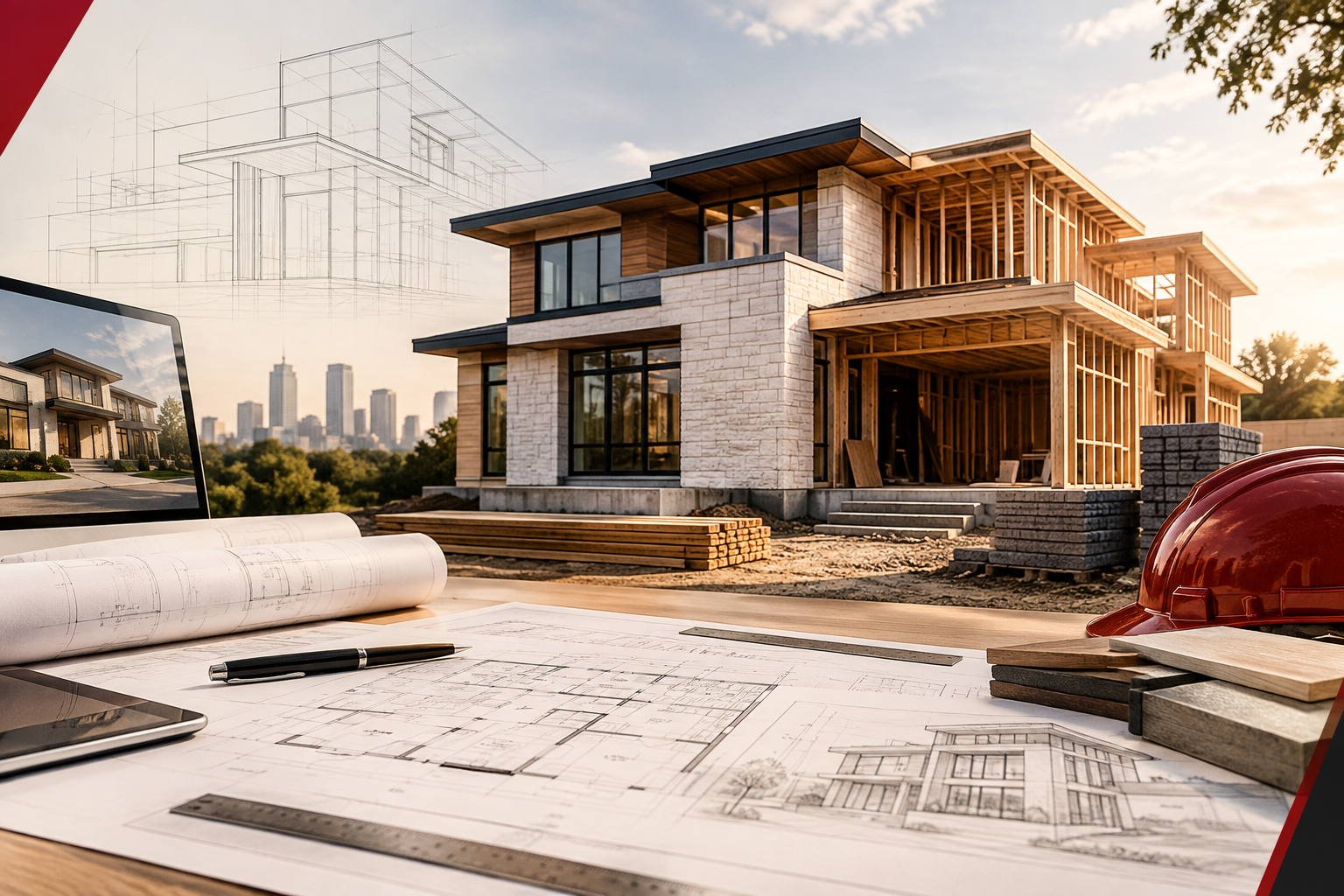
Marwood Construction has delivered both new-construction and remodeling projects across Houston neighbourhoods under the design-build model, and this page explains what it is, how it compares to traditional delivery, and how to evaluate a design build contractor Houston homeowners can trust.
This method replaces the alternative conventional method referred to as the design-to-bid approach.
This is where the owner hires an architect to prepare building plans and documents so the owner can solicit separate bids and contracts for their new home.
The design-build construction method necessitates that the designers, general contractors, project owner, and subcontractors work together in a collaborative approach to complete a project from concept to completion.
Did You Know? “Did you know that according to the Construction Industry Institute (CII), projects using the design-build method are completed 33% faster and cost 6% less on average compared to traditional design-bid-build projects?”
Did You Know? (Additional Source) A 2018 industry study reported by the Design-Build Institute of America (DBIA) found design-build projects are delivered 102% faster than design-bid-build projects, with 3.8% less cost growth, and the Georgia Department of Transportation notes that design-build lets design, permitting, and construction proceed concurrently instead of in sequence, which is what drives most of that time savings. Source: Design-Build Institute of America research, reported via ENR.com
Here, all stakeholders, instead of playing the blame game or pointing fingers for any lapse, work together as a team to collaborate and solve problems in the best interest of the owner.
It is an approach to create the best solutions, minimise costs, streamline schedules, and achieve both design and construction efficiencies.
You may read our comprehensive resource explaining the pros of a design build process in the construction industry.
Learn why the design-build method for construction delivery is the best overall approach.
1. What is a design-build construction delivery process?
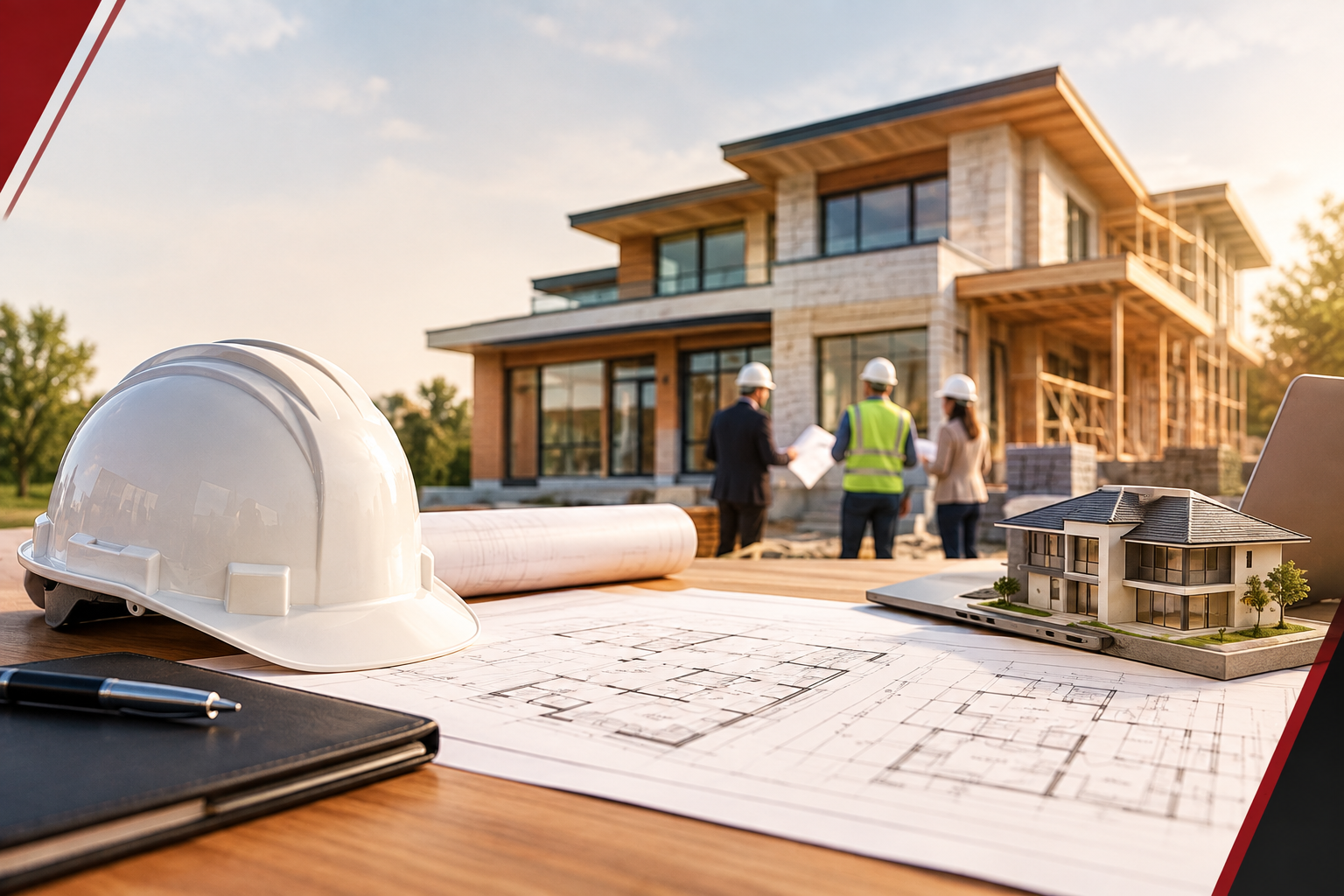
Design build is a building delivery method for new homes and remodeling where the project owner does not have to contract separately with designers and builders but rather hires a design-build contractor as a single point of contact.
It fosters better collaboration, reduces the risk burden on the owner, and streamlines the information flow among the project stakeholders.
As opposed to other delivery methods, the design-build method enjoins a structure that brings everyone together under a shared goal of achieving success for the overall project rather than that of the individual portions or phases.
It allows for the sharing of knowledge and expertise in a collaborative atmosphere rather than the traditional adversarial relationship when pitted against one another.
Importantly, the project owner deals with one person who in turn enters into dealings with other stakeholders, namely, the engineers, architects, subcontractors, etc., on behalf of the owner.
This approach is often bandied about in recent times as the optimal way to reduce the project timeline and costs.
According to a study conducted by the Construction Industry Institute comparing 350 odd projects with different delivery methods, the design-build construction method was found to reduce design time and reduce total construction cost.
Here, the new home builders were accountable for all contractual risks associated with the project such as assessments, estimation, schematics, subcontracting, engineering, and construction.
In other delivery methods, the architectural process is executed separately, often resulting in delays and cost overruns during the building process.
However, with the design-build method, the project team gains insights into the constructability and cost of various designs, resulting in a robust architectural process, a streamlined schedule, and a well-defined construction cost budget.
The home builder takes upon himself the role of managing risks, executing administrative tasks, and dealing with potential legal burdens.
Importantly, even after shifting the task of project management to the house builder, the project owner does not lose control over the project.
The main point is that instead, he or she will be spared to focus on other scenes of the project.
Design-Build vs. Design-Bid-Build: What’s the Difference for Houston Homeowners?
The approach here to the issue of design structure vs command structure is on a contract versus two and a peak of responsibility.
The main point is that in the binary plan building, the traditional method, the owner hires a designer first, gets a finished plan, and only requires competitive offers from separate subcontractors.
In simple terms, in the construction plan, the building designer and traditional comparison choose a single team integrated from day one, which explains why schedules are compacted and disputes over the change of construction codification occur.
| Factor | Design-Build | Design-Bid-Build (Traditional) |
|---|---|---|
| Contracts | One contract, one point of responsibility | Separate contracts with architect and contractor |
| Timeline | Design and construction phases overlap. | Design must finish before bidding and building starts |
| Cost certainty | Pricing developed alongside the design | Final cost not known until bids come back |
| Accountability | Single point of responsibility design build model | The owner mediates between the designer and the builder. |
| Change orders | Fewer, since the team collaborates from the concept | More common when bid drawings meet field conditions |
| Best for | Owners who want speed and one contact | Owners who want full design locked before pricing |
2. What are the benefits of a design-build delivery method?
The design to build the delivery method offers a range of benefits that other delivery methods don’t. No wonder most of the home-building construction activity in recent times is done through this method. The benefits are listed below:
- Faster Timelines – Rapid project delivery as both designing and building cost estimating take place concurrently.
- Single Source of Accountability – Smoother process, as there are no conflicting recommendations from the designer and contractor, and every project stakeholder works together as one entity for the owner’s best interest.
- Collaboration of Ideas – One way to solve this is through fuller solutions and added value with those who bring different themes and from the team.
- Process Efficiency – Looking at this, communication, transparency and cooperation are needed to reach labour objectives and objectives.
- Cost Efficiency – Basically, better price simplification in the proper provision and management of activities.
Why Houston Homeowners and Businesses Choose Design-Build
The benefits of design build carry extra weight in Houston, where humidity, clay-heavy soils, and floodplain rules can all affect a foundation or drainage design.
A local design build contractor Houston families already trust can catch those site conditions during preconstruction, instead of discovering them after bids are locked.
Houston’s mix of historic inner-loop homes, new construction in growth corridors, and commercial buildouts also means permitting requirements vary block by block, so a single point of contact who already knows the city’s review process saves real time.
“In Houston specifically, the properties we work on rarely fit a cookie-cutter plan flood elevation, older utility lines, and HOA review all shape the design before a shovel goes in the ground.”
“Design-build lets our architects and field team flag those issues together in week one, instead of a contractor discovering them after the drawings are already bid out.”
— Patrick Martin, CEO, Marwood Construction
3. What are the steps of a design build process?
A typical remodeling process has around 5 steps, which may appear to be ‘more’ considering the fact that it is a simplified process eliminating multiple steps in the traditional method.
However, it is important to know that these steps often overlap, unlike in other delivery methods where each step is performed by different entities and often after the completion of the previous one.
A design to build process, on the other hand, is more fluid, with every member working together to move things smoothly and quickly.
This delivery method process has 5 steps as follows:
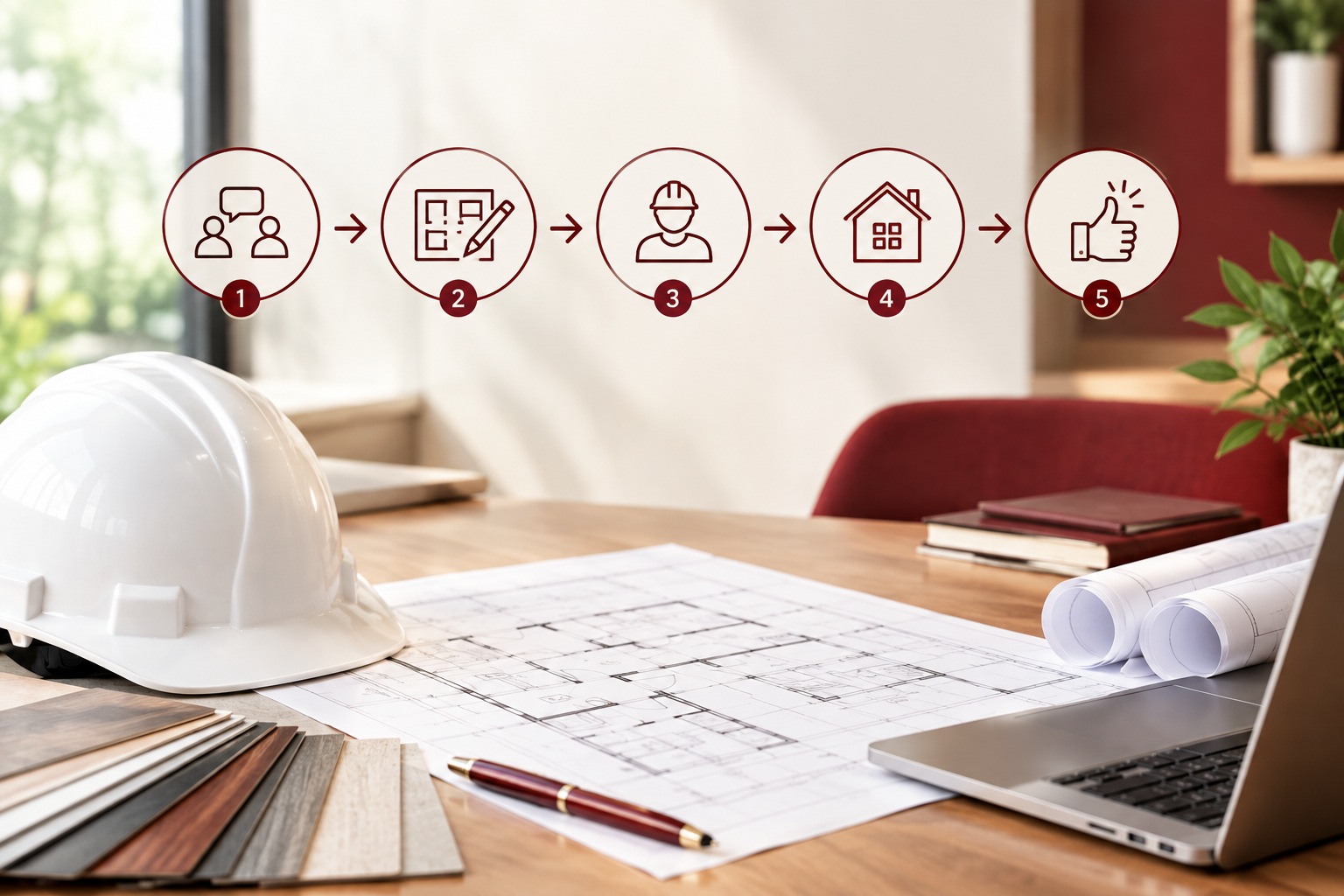
Design-Build Process at a Glance
For a quick design build process explained view before the full walkthrough below, here is how the five phases typically break down on a Houston home project.
| Phase | What Happens | Who’s Involved |
|---|---|---|
| 1. Selecting a team | Owner vets design-build firms on experience, budget fit, and vision. | Owner, prospective design-build contractor |
| 2. Preconstruction | Site, utilities, topography, and lifestyle needs are assessed. | Owner, architect, general contractor |
| 3. Architectural design | Concept drawings, pricing, and engineering plans are finalised. | Architect, engineer, estimator |
| 4. Construction | Subcontractors and suppliers are engaged; building begins. | General contractor, subcontractors |
| 5. Postconstruction | Municipal inspections and as-built documents are completed. | Owner, general contractor, inspectors |
- Selecting a team:
In this phase, the project owner vets potential candidates from among a group of design build contractors and chooses a team that has the best building contracting experience and understands the project’s requirements, budget, and vision.
The goal is to select the most like-minded house builder out of the small collection of professional and qualified candidates.
The architectural team usually includes the general contractor, the engineer, and the architect.
In lesser situations, the owner may ask an interior decorator to contribute to the creation of the dwelling.
Although cost is an important criterion to be taken into consideration, it should not always be the determining factor, as the goals of the process are based on skills and experience.
Moreover, the value of this process is advantageous to every stakeholder: architects, home builders, and project owners.
This is because the designers’ and house builders’ contributions are based upon their skill level, resulting in a superior quality project at substantially reduced risk factors for the owner.
The selection process of the designer and home-building contractor may overlap in the next preconstruction step, where the team is expected to do considerable research of the home-building site.
- Preconstruction:
This may appear to be a smaller step compared to the other steps of the process, which nevertheless is critical due to its attention to detail.
Here is when the design team learns about the owner’s lifestyle, vision, targeted budget, and the challenges associated with the project.
During this step, the owner should ask umpteen questions to clarify each aspect of the project and get a picture of things to be expected.
In this step or phase, the team works collaboratively to assess the site, utilities, trees, topography and other essentials to determine the factors that influence the design and construction before the architectural process begins.
- Architectural design:
The architectural process commences once the project parameters are defined, including the owners’ research and interior feature elements, architectural preferences, building lot and target budget.
In fact, some of the architectural design work may have already begun during the pre-construction phase.
In this step, the team members collaborate to come up with the best designs by keeping the parameters in mind.
The team makes assessments for optimising productivity, saving costs, meeting style preferences, and addressing the functional requirements.
Thereafter, preliminary drawings, pricing estimates, and the final targeted budget are presented to the project owner.
Once the initial concept drawings are agreed upon, the project schedule is developed and the preliminary building costs are calculated and confirmed with the targeted budget.
Moreover, since the designer and premier builder are on the same page vis-a-vis the drawings, the project need not entail any further changes.
The drawings would then go to the engineers for engineering plans, and the designer would complete the final plans ready for permitting. In case you want to see some of the LEED-certified homes with design build contractors, view our video.
- Construction:
After the home plans and engineering are finalised for permitting, the home builder selects the subcontractors and suppliers for the project and begins the new home construction process.
This approach also minimises the need for non-elective change orders while contributing to construction cost controls.
And even though there may be unforeseen building document challenges faced during the contracting phase, the fact that the design team has been working as one unit from the beginning fosters a solution-focused resolution to the challenges effectively.
The contracting work progresses smoothly as there is seamless communication established across the value chain and a single point of contact selected for every activity.
Further, there is better accountability as everyone in the design team works towards meeting the same goals, objectives, and deadlines.
- Postconstruction:
New home building must be approved by the local municipalities through compliance inspections.
Once final inspection is done and after substantial completion of the home renovation or new house building is achieved, the home builder can produce the project construction as-built documents for the owner for future reference.
Hiring a Design-Build Firm in Houston: What to Look For
A key finding shows that the enlistment of a design construction society is a more important conclusion than of a single declarer, as it is a team that takes the first sketch task to the last inspection.
What’s worth noting is that before ratifying, apply for a licence, insurance and at least three Houston zone undertakings finished to a degree similar to what you see.
- In simple terms, work internally or closely with designers under design declaration.
- A clear, written design build project delivery timeline with milestones for design, permitting, and construction.
- References from recent Houston clients who can speak to how change requests were handled mid-project.
- A transparent estimating process that shows how the budget moves from concept pricing to a fixed contract.
- Proof of Texas contractor licensing and current general liability insurance.
Is Design-Build Right for Your Home Renovation?
Design build home renovation projects tend to fit best when the scope touches both structure and finishes, additions, whole-home remodels, or kitchen and bathroom overhauls that need engineering input, not just cosmetic updates.
Marwood’s home remodeling, whole-home remodel, kitchen remodeling, and bathroom remodeling teams can be brought in under the same design-build contract described above, rather than as separate hires.
If your project is a single, well-defined swap like replacing windows, a standard contractor bid may still be simpler; design-build earns its value once structural, mechanical, or layout changes enter the picture.
Ready to Build Smarter, Faster, and More Efficiently?
The collaborative delivery method has certainly many advantages over traditional construction delivery methods in terms of accelerated schedule, seamless communication, cost savings, minimal change orders, and others.
However, notwithstanding the benefits, the project owner should take time to select the right design-build contractor with the experience, expertise and similar project vision for the best home-building results.
You may read a blog to know further how the design-build construction delivery method is markedly better than other methods and why you should choose it for your project.
Further Reading on Design-Build
For readers who want to see the method discussed outside Marwood’s own site, these are credible third-party and government resources:
- Design-Build Institute of America industry research and delivery-method education (dbia.org)
- Georgia Department of Transportation public-sector explanation of design-build delivery
→ https://dot.ga.gov/GDOT/pages/DesignBuild.aspx
- ENR (Engineering News-Record) coverage of the DBIA/CII design-build performance research
→ https://www.enr.com/articles/45839-conference-reaffirms-strength-of-design-build-delivery
FAQs on Design-Build (Efficient Construction Delivery)
Q1. What is design-build construction?
Ans: Design-build construction is a project delivery method where the owner signs a single contract with one entity, the design-build contractor, who handles both design and construction, ensuring smoother communication and faster delivery.
Q2. Why is design-build considered more efficient?
Ans: Because design and construction teams work collaboratively from the beginning, the process reduces conflicts, minimises delays, accelerates schedules, and lowers costs.
Q3. Does design-build cost more than traditional methods?
Ans: No. In fact, design-build typically results in cost savings due to fewer change orders, better cost estimating, and a streamlined process.
Q4. How does design-build benefit homeowners?
Ans: Homeowners benefit from a single point of contact, greater transparency, better collaboration, faster project delivery, and fewer risks compared to other methods.
Q5. How do I choose the right design-build contractor?
Ans: Look for contractors with proven experience, strong design capabilities, transparent processes, and a track record of successful design-build projects.