

You know you should have talked with a few general contractors if you’ve ever had half-built walls, timelines slipping, trades nowhere to be seen, and thought, “Maybe I should’ve hired a general contractor. “Yes, you’re not alone.
One guy’s waiting on materials, another’s blaming the foundation, and everyone’s pointing fingers. It’s a nightmare, really, trying to manage all that while keeping costs in check. That’s why having general contractors on board for your construction projects makes a lot of sense
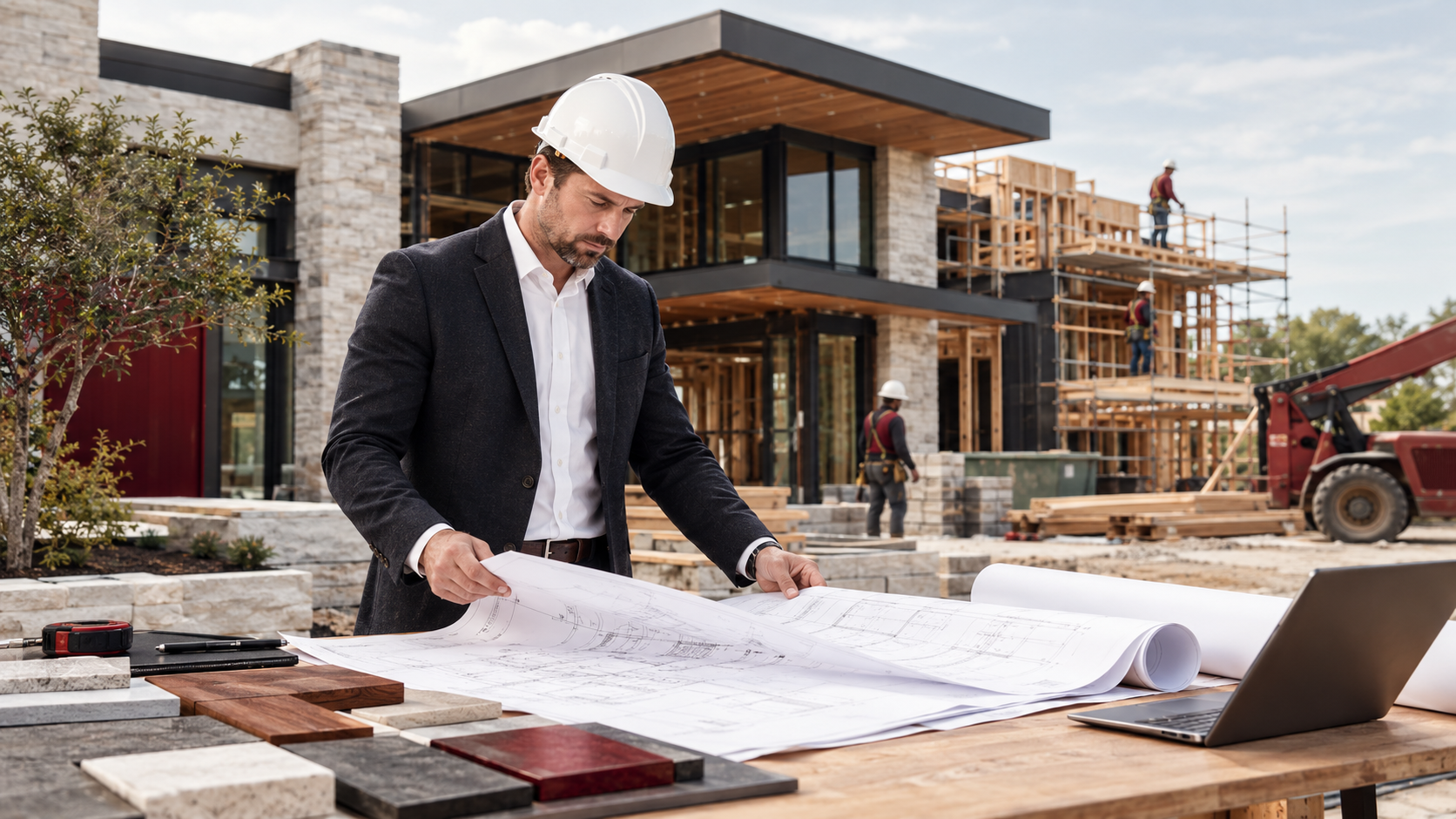
They’re basically the glue, the conductor, the one who actually facilitates the whole project moving from start to finish. They’re the ones who handle all the bureaucracy, oversee subcontractors and keep everything on track while you are time- and money-wise.
Find out how a suitable general contractor can save you time, protect your budget, and help you avoid the chaos of your project.
You’ll get a clear picture of what they actually do, how they keep every trade aligned, and why their oversight is super essential if you’re looking for a smooth construction process.
Across River Oaks, Bellaire, the Museum District, and the rest of the Houston metro, property owners searching for a general contracting company Houston crews actually trust are really asking one question: who can carry the whole scope, not just one piece of it? This page breaks down the full range of general contractor services, how a general contracting company structures the engagement, and what to check before you sign.
What Do General Contractors Do?
General contractors are the competent backbone of every build done right. They’re the ones pulling every little moving piece together. Plans get drawn, and then they’re in, running the whole process. Wisdom prevailing, general contractors should be involved in the development of the construction documents.
Sorting budgets, bringing in the right subcontractors, keeping an eye on timelines, chasing materials, and making sure everything goes where it belongs. They manage it all and keep things ticking before it all goes sideways.
Solid general contractors see the problems before they even develop. They’re working on permits and inspections, keeping the inspectors happy, while still updating you about everything that matters. You don’t get ghosted or stuck guessing.
The process of general contracting requires the ability to communicate, they pivot, and they keep the stress out of your hair. In Houston, having someone who knows the terrain is a relief.
Take Marwood Construction and Patrick Martin (our lead), for example.
He’s out there, hands-on, leading each phase with that sharp eye only decades of doing the job can give. Clients actually feel seen, heard, and updated and aren’t left guessing. That level of involvement will make your whole process feel like a plan you can trust.
Why General Contractors Are Essential

Hiring a general contractor will be the difference between a build that rolls on quietly in the background and one that keeps you up at 2 a.m., stressing over which sub’s supposed to be on-site tomorrow.
It’s one point of contact (one person who knows everything, how it fits, and what’s going on with the process). That’s what keeps everything on track. They are responsible for ensuring the budget is tracked correctly, that trades come in on time, permits are secured and materials are ready before work can continue.
They know how to negotiate with suppliers but never forget who their trusted provider is. They keep the plumber from getting his feet stepped on by the electrician and ensure that the jobs are completed properly.
The house you had in your head? The one you sketched out ages ago? You’ve got someone fighting to make sure you actually get it.
Sure, doing it yourself or running the show as the owner might seem like a money-saver upfront. But it’s a slippery slope. One missed inspection, one blown deadline, one dodgy shortcut, and you’ll be deep in budget hell, or worse, ripping out walls to fix someone’s “workmanship”.
But working with qualified general contractors, you get what people forget: structure. Someone walking point, keeping score, holding the line so you can step back, breathe, and actually enjoy watching the place come together (instead of trying to stop it from falling apart).
Full-Service General Contractors Service: What’s Included
Choosing a general contracting company that covers every phase, not just framing and drywall, is what keeps a Houston project from stalling. A full-service general contractor carries the work from first sketch to final walkthrough.
The breadth of general contractor services matters because Houston projects rarely stay in one lane. A kitchen remodel can turn into an electrical panel upgrade, and a home addition can turn into a drainage redesign.
Here’s a general contractor services breakdown by project phase, so you know what a full-service firm should actually be doing at each stage.
| Project Phase | What’s Included |
|---|---|
| Pre-Construction | Site evaluation, budget development, permitting strategy, subcontractor bidding |
| Design Coordination | Working with architects and designers, value engineering, and material selection |
| Active Build | Subcontractor scheduling, daily site supervision, quality inspections, safety oversight |
| Close-Out | Punch list walkthrough, final inspections, warranty documentation, client sign-off |
That range covers new construction, home additions, and light commercial buildouts alike, which is why the types of general contractor projects a strong firm takes on tend to run wide instead of narrow.
General Contractors Offering Houston Construction Services

Houston’s got good general contractors, sure, but ones like Marwood Construction are the ones who don’t just jump in when the hammering starts. They are willing to work with you from the moment you have a rough idea of what you really want.
It doesn’t really matter if you’re dreaming up a fresh build or bringing your tired old place back to life with a remodel; they’re in it all the way. They guide, lead, and make sure you don’t end up regretting the whole thing halfway through.
New home builds? They go into every detail. Making sure your “oh, this’ll look great” ideas don’t smash headfirst into building codes or some hidden pitfall in the soil.
They’ve seen the traps, dodged them, then kept the design intact without watering it down. That’ll save you the kind of delays that turn months into years.
Whole-home remodels? Walls move, systems get ripped out, and new tech goes in, and instead of becoming a mess, they pull it together, piece by piece. Room additions? Converting that dead garage into livable square footage?
Marwood Construction respects the old bones and good stories. They bring the new in carefully, like it belongs, without erasing what made the place special.
General Contractors’ Responsibilities
| Administrative Management | Construction Management |
|---|---|
| Material Procurement | Control of Onsite Construction Activities |
| Subcontractor Contracting | Quality Control & Inspection |
| Insurance Administration | Resource Logistics |
| Material Estimating | Resource Scheduling |
| Financial Management | Onsite Safety |
What are common types of general contractors?

General contractors commonly have the discipline and systems to build projects that we take for granted. The real difference in general contractors is the years of experience the building team or licensed GC actually has.
Building projects can typically be simplified into 4 classifications in the construction industry. These would be
- Residential – associated with people living in dwellings, like single-family properties and multi-family apartments
- Commercial – typically associated with properties with public access, like office buildings, shopping centres and smaller business facilities,
- Industrial – commonly associated with manufacturing, fabrication and process facilities
- Institutional – typically properties owned by the government, like highways, schools and public works buildings
Residential – New Home Construction in Houston
Building a new home… There’s the dream, the blueprint, the Pinterest board popping off… But behind all that? Someone has to manage the wood orders, line up the electricians, make sure the plumbing doesn’t collide with the structural beams, and keep the inspectors happy.
That’s all the invisible things good general contractors handle.
Marwood Construction actually takes the time to shape the build around your life, your plans, and your budget. They’re basically the translators between the homeowners sketching the ideas and the ones pouring the slab. With them, you won’t have the “what do you mean that wall can’t go there?” moments.
They provide both onsite management (construction management) and offsite management (administrative management), orchestrating your new home construction project. This full-service approach makes them completely accountable to the owner for delivering results.
Residential – Major Home Renovations and Remodeling Services

When you’re going into a major home renovation or deciding your kitchen or bathroom is due for a real glow-up, that’s when you really need to work with general contractors.
They’re the ones keeping the wheels turning, the subs aligned, and the standards high. Working with them, you’ll be making sure you’re not left staring at exposed studs and scrambling over code violations. Especially in Houston, where every remodel’s a little different and the stakes get high fast, someone like Marwood Construction keeps a steady hand on the job. That’s a serious lifesaver.
What Should I Know Before Starting a Whole-Home Remodel?
Whole-home remodels aren’t just “move this wall, swap that tile”. It’s way more strategic than that…mechanical systems, plumbing, electrical – all tangled up in layers you won’t see until work’s already started.
General contractors get ahead of that. They map the guts of the house before any demo starts, sit with designers, talk numbers and timelines, and keep expectations tight so you’re not blindsided halfway. Solid plans and documents (that’s how they keep it from turning into a budget black hole or schedule disaster). You stay on track and, more importantly, on vision.
Why Is Kitchen Remodeling Considered Complex?
Kitchen remodeling is expensive, detailed, and full of decisions that’ll haunt you if you rush them. A GC steps in, listens to your big ideas, and then sees what actually works when the electrician starts wiring and the plumber checks clearances.
They help you choose materials that won’t stain or crack and appliances that fit (really fit), and they line up the right trades in the right order.
The more complex the project, the greater the need for an accredited professional general contractor.
How Do General Contractors Manage Bathroom Renovations?
Bathrooms do look like a small space, but behind that tile, you have pipes, potential leaks, and floors that might not even be rated for that stand-alone tub you’re dreaming of.
General contractors sniff out problems most people won’t see until water’s already seeping into the subfloor. They plan for rerouting, reinforce what needs reinforcing, keep demolition controlled, and talk you through the impact before you get the invoice.
You end up with something that looks great, works properly, and doesn’t surprise you six months down the line.
How Do General Contractors Manage Home Additions and Space Conversions?

Okay, so you’re thinking: let’s stop making do with what we’ve got. Maybe bump out a wall, turn the garage into a proper studio, and give that dusty attic some real purpose. But that’s exactly where it gets hairy (structure, style, load-bearing mess).
General contractors keep the process snug and solid, making sure the new home addition doesn’t look like an afterthought slapped onto the old house.
Garage conversions are super popular. You’re turning the space into a cosy office, a retreat, or even a guest room for visiting friends. And room additions (expanding your lounge or stacking on another bedroom) sound easy until you realise rooflines don’t magically line up, and walls don’t like being moved.
And before a single nail’s tapped, you have to face things like deed restrictions, zoning laws, and Houston building codes. Skip that and you’ll be staring at red tape instead of fresh walls. Solid general contractors handle all of it. Permits, inspections, city approvals…they’re on it.
Read more about room additions by following this link.
What Goes Into Working With Historical Restoration Contractors in Houston?
With historical restorations, you won’t be slapping on new paint or tearing out walls here. You’re stepping into the shoes of builders from a century ago and trying to keep that soul intact while incorporating the modern comforts we can’t live without. You’re honouring the past without freezing it in time, and that takes some great skill.
You have two main ways to tackle it:
- Complete restoration: Every trim, every window mullion, replicated. You’re hunting down custom woodwork and those weird old fasteners no one uses anymore. Sure, it’s pricier and takes forever, but for purists? Worth every penny.
- Hybrid restoration: Still respects the historic state but allows for the incorporation of modern elements where needed. Think reclaimed wood beams paired with updated plumbing. It’s the sweet spot when you need to stretch the budget without losing the charm.
But you can’t just call any general contractor. You need someone with the badge, the brain, and the patience to manage all the moving parts.
Marwood Construction is exactly the kind of team you want for this. They know how to source those hard-to-find materials, arrange artisans who still know how to do hand-plastering, and deal with Houston’s building codes.
General Contractors’ Commercial Construction Projects

Commercial construction projects vary in size and nature of use and purpose. They could be properties used for office space or facilities for merchandise or services.
The general contractors for constructing these projects are commonly referred to as commercial general contractors. Their skill sets’ required experience is vastly different from the residential GCs.
Differences in Commercial GC’s and Residential GC’s
| Feature | Commercial General Contractor | Residential General Contractor |
|---|---|---|
| Project Type | Large-scale structures like offices, retail spaces, and medical centres. | Smaller projects such as single-family homes or small apartment buildings. |
| Regulations | Must follow stricter codes, including accessibility (ADA), fire safety, and zoning laws. | Primarily focused on building codes for homes. |
| Scale and Complexity | Handles larger, more intricate, and complex projects. | Specialises in crafting unique and personalised homes, often on a smaller scale. |
| Equipment | Uses large-scale equipment like cranes, bulldozers, and excavators. | Uses smaller tools and equipment suitable for tight spaces, such as hand tools and compact machines. |
| Materials | Often uses specialised materials to meet commercial needs and codes. | Uses a wide variety of standard residential building materials. |
| Client Interaction | Collaborates with a wide range of professionals like architects, engineers, and designers. | Typically works directly with the individual homeowner or family. |
| Project Timeline | Projects are often longer due to their complexity but can be faster due to more workers. | Projects are generally shorter, as they are smaller in scale. |
New Commercial Construction General Contractors

Commercial construction projects are often larger structures that require a significant amount of civil work. Parking areas, drainage structures and security lighting are just some of the requirements.
Their envelopes are often steel and concrete structures. These types of project building codes are directed to matters of public safety. These include handicap accessibility and fire suppression, and emergency exit plans.
Although the disciplines and skill sets are similar, unlike residential projects, the emphasis of the commercial building codes is greatly different. In addition, the size of the management teams that are needed for supervising and documenting reports is much larger.
Commercial Remodeling
Commercial remodeling has many of the common requirements for general contractors’ responsibilities and skills, as do residential remodeling projects.
One of the significant factors when it comes to commercial remodeling is the disruption of the business revenue flow from the closing of the business during construction improvements.
Although there are strategies in many cases to work around the improvements to avoid closing the business.
This is where the experience of a good commercial general contractor pays off. Effectively facilitating a commercial remodel project requires the ability to understand new commercial construction in order to put together sizable improvements.
Construction Project Delivery Methods by General Contractors
- Bid to Build: You hire an architect, get your plans, then start shopping them around to builders to see who offers what. Sure, you might get a sharp price, but it’s a gamble, really. If the plans aren’t crystal clear or someone misses a detail, it can explode into costs or delays you didn’t see coming.
- Design-Build: One company, like Marwood Construction, carries the design and build from day one. Communication’s tighter, budgets don’t blow out as fast, and timelines stay sane. If you want fewer issues and someone to keep the whole thing stitched up, this is usually the go.
- Project Management: Still want to keep your hands on the wheel? With project management, you stay plugged in while the contractor runs the team, the materials, and the daily routine. Higher involvement, sure, but with someone covering the day-to-day so you’re not losing sleep over who’s doing what.
| Comparison of Construction Delivery Methods | Pros | Cons |
|---|---|---|
| Bid to Build | Competitive pricing; clear bidding process | Higher risk of design errors; change orders likely |
| Design-Build | Single point of accountability; faster delivery; better cost control | Less flexibility to compare multiple bids |
| Project Management | High owner control; transparency in cost | More owner involvement is required; higher risk exposure |
Project Management General Contractors: How the Engagement Is Structured

General contractor project management is the machinery behind a smooth build. It’s the part clients rarely see, but it’s the reason trades show up in the right order.
Subcontractor coordination sits at the centre of it. The general contractor schedules framers, electricians, plumbers, and finish trades so nobody’s waiting on someone else’s unfinished work.
Permitting runs alongside that schedule. In Houston, that means pulling permits through the Houston Permitting Center and coordinating inspections so the job doesn’t stall waiting on a sign-off.
Budget and timeline oversight is the third leg. A general contractor tracks draws against the schedule of values, flags scope changes before they become disputes, and adjusts the calendar around Houston’s permitting and inspection timelines.
This is also where general contractor project management earns its keep on a full-service Houston construction company as one point of contact for budget, schedule, and quality instead of three or four people pointing fingers.
General Contractor vs. Specialty Contractor: Which Do You Need?
Not every project needs a general contractor. A single-trade job, like a roof replacement or a window swap, is often better handled directly by a specialty contractor.
The general contractor vs. specialty contractor question comes down to scope. Once a project touches more than one trade, a GC’s subcontractor coordination and permitting oversight start paying for themselves.
| Features | General Contractor | Specialty Contractor |
|---|---|---|
| Scope | Multi-trade projects: new builds, additions, whole-home remodels | Single trade only: roofing, electrical, flooring, etc. |
| Who Manages Trades | Coordinates and schedules every subcontractor on the job | Manages their own crew, nobody else’s |
| Permitting | Typically pulls and manages permits for the whole project | Pulls permits for their own trade only |
| Best For | New construction, additions, whole-home or light commercial remodels | Isolated repairs or single-system replacements |
If you’re comparing a general contractor vs. a specialty contractor for a project that touches framing, plumbing, and electrical all at once, the GC route usually saves more in coordination than it costs in markup.
How to Choose the Right General Contractor in Houston

Hiring a general contractor is the biggest decision in the entire process, bigger than the floor plan or the finish package. Get this part right and everything downstream gets easier.
With Houston’s booming building scene, everyone seems to know a “guy”, but you’re not after just anyone. You need an expert. Here’s what actually matters.
Licensing and Insurance
Check the paperwork. If they’re not licensed or insured, it’s a hard no. Licensing means they’re legit in the eyes of Texas law. Insurance? That’s your shield when something goes sideways, because on a job site, it does more than anyone would like.
General Contractor Licensing and Insurance: What Houston Requires
Texas doesn’t issue a statewide licence for general contractors, which surprises a lot of homeowners doing this for the first time. General contractor licensing and insurance still matter, just through a different set of checks.
Electricians, plumbers, and HVAC technicians working under that general contractor do need a state license, issued through the Texas Department of Licensing and Regulation. Ask any general contracting company Houston property owners are considering for proof of general liability insurance, workers’ compensation coverage, and license numbers for their subcontractors before signing anything.
Did You Know? The U.S. Bureau of Labour Statistics projects employment of construction managers — the occupational category general contractors fall under — to grow 9% from 2025 to 2035, much faster than the average for all U.S. occupations. Source: U.S. Bureau of Labour Statistics, Occupational Outlook Handbook — bls.gov/ooh/management/construction-managers.htm
Portfolio of Similar Projects
You wouldn’t hire a wedding photographer to shoot an NFL game, so why trust your 1920s bungalow to someone who’s only done strip malls? Go through their past projects. Look for homes that match your scope.
Transparent Communication and Proposals
If the proposal is vague, cryptic, and full of plot holes, don’t work with them. A trustworthy general contractor lays it all out: costs, timeframes, and materials. They answer questions before you think of them.
Proven Client Satisfaction
Sure, a contractor can talk the talk. But what do people who’ve actually worked with them say? Reviews, references, and referrals paint the real picture. The best teams have a trail of happy homeowners who’d hire them again without blinking.
What Drives the General Contractor’s Cost in Houston

General contractor cost factors go beyond square footage. Materials, labour availability, permitting complexity, and the condition of the existing structure all move the number.
| Cost Factor | How It Affects the Price |
|---|---|
| Project Scope | Multi-trade work costs more than single-trade repairs but centralises risk under one contract. |
| Material Grade | Premium finishes can add 30–50% over standard-grade materials. |
| Permitting Complexity | Additions and structural changes need more inspections and longer permit reviews. |
| Site Conditions | Older Houston homes may need foundation or drainage work uncovered during demolition. |
| Labour Market | Houston’s active construction market can extend contractor lead times during peak season. |
Weighing these general contractor cost factors against three or four itemised bids, not just the bottom-line number, is usually the fastest way to spot a proposal that’s missing scope.
Why Choose Marwood Construction Compared to Other General Contractors

Marwood Construction really sets the bar in Houston. Not just building luxury spaces…but doing it with this almost obsessive attention to detail that’s rare.
People don’t just hire them because they’re good with hammers and plans. It’s the way they treat your vision like a blueprint and your budget like their own wallet (keeping everything grounded, organised, and, honestly, just human).
Patrick Martin has all the credentials, sure (degrees, certifications, and a resume packed with hands-on experience), but what matters more is how present he is.
He’s in the thick of it, overseeing every detail, troubleshooting before things go sideways, keeping trades on track, and keeping clients updated. That kind of leadership is rare. It’s steady.
Choosing Marwood Construction means choosing peace of mind, creative collaboration, and a process that feels respectful, transparent, and… kind of exciting. You’re basically getting craftsmanship with heart.
Wrapping Up: Start Your Project With Houston’s Leading General Contractors
It doesn’t really matter if you’re going for a fresh new build, a whole-house remodel, or bringing a historic gem back to life; the general contractor you choose is everything. You want someone who not only “gets it” but gets you. And that’s Marwood Construction.
Partnering with Patrick Martin means you have a seasoned captain steering the process – licensed, certified, actually present, and genuinely invested.
It’s hands-on. All the way from that first chat to the final walk-through, every detail is monitored with precision and pride.
This isn’t the time to gamble. Your build is your investment, comfort, and your story. With Marwood Construction, you lean back a little, knowing scheduling mistakes, budget blowouts, or any permit mess aren’t creeping up behind you.
Ready to start building? Get in touch with Marwood Construction, talk directly with Patrick, lay it all out, and build with confidence.
FAQs: General Contractors
Q1: What does a general contractor do daily?
Ans: They handle schedules, keep budgets in check, and manage subcontractors. Every day involves client updates, problem-solving (because something always pops up), keeping every phase lined up, and making sure the build meets quality and code requirements efficiently.
Q2: Is hiring a general contractor worth it?
Ans: 100% yes. You’re basically paying for a smoother process, fewer mistakes, and someone who actually knows which permit goes where. General contractors handle the process so your dream build becomes a reality instead of a cautionary tale.
Q3: Do general contractors offer warranties?
Ans: Yes. The good ones do. Firms like Marwood Construction back their work with workmanship warranties (covering materials and labour down to the last nail). That means if something goes south after the work’s done, they’re on the hook, not you.
Q4: Can general contractors manage both residential and commercial builds?
Ans: Yes. Experienced general contractors handle both sectors, shifting smoothly between luxury homes, full-home renovations, heritage refurbishments, and commercial spaces. Marwood Construction is a prime example, with a portfolio that spans everything from high-end homes to retail build-outs. They scale their process to fit the job, regardless of its size.
Q5: How do I verify if a general contractor is qualified in Houston?
Ans: Do your homework. Make sure they’re insured, and don’t skip those testimonials. Although Houston doesn’t require GCs to have a licence, the subcontractors do need to be licensed. Marwood Construction ticks every box (the team’s licensed, insured, experienced, and backed by happy clients).
Q6: What’s the difference between a general contractor and a specialty contractor?
Ans: A general contractor manages multiple trades, permitting, and the overall schedule, while a specialty contractor handles one trade, such as roofing or electrical, on their own. For projects touching more than one system, hiring a general contractor typically costs less in delays and rework than coordinating trades yourself.
Q7: What should I look for when choosing a general contracting company in Houston?
Ans: Check for general liability insurance, workers’ compensation coverage, a portfolio of similar Houston projects, and licensed subcontractors before signing a contract. Choosing a general contracting company with transparent, itemised proposals is the clearest early signal of how the rest of the project will go.